Web Video Imagery logo featuring colorful circular design and bold text, representing a video production company focused on brand storytelling and promotional content.

The Real Magic in Video Production Happens Behind the Questions, Not the Camera

Anyone can press record, but effective video marketing requires a videographer who knows how to conduct an interview that captures the authentic emotion and “why” behind your business.

There is a misconception in the corporate videography world that the “magic” happens in the camera. People think it’s about having the most expensive lens, the perfect cinematic lighting, or the latest drone. But after three decades in visual storytelling, I can tell you exactly where the real magic happens: the interview.

Not many videographers know how to dig deep. They know how to set up a tripod, but they don’t know how to read body language, sit in a moment of silence, and dig into the true why of a story.

During my 20 years in TV news, I worked alongside some of the best reporters in the country. Standing behind the lens day in and day out in a fast-paced newsroom environment, I didn’t just learn how to light a scene, I learned the anatomy of a question. I learned how to guide a conversation, spot the emotional shift in a subject’s eyes, and capture a narrative that actually resonates.

Let me give you an example.

Recently, I was shooting a brand story for a Utah still photographer who had been running her business for over 25 years. We were going through the standard questions, getting good background information, but we hadn’t hit the core of her story yet.

I decided to push a little harder. I looked at her and asked, “You’ve been doing this for over two and a half decades. Why haven’t you just given it up and retired?”

The atmosphere in the room shifted immediately. She paused, and her eyes welled up with tears.

She told me about a family that had hired her to document the end of a loved one’s life. They were dying of cancer, and the family desperately wanted one last, beautiful family photo together. Then, she talked about the other side of her lens: helping passionate entrepreneurs start their businesses, stepping into their world, and distilling their entire vision into a single frame to help them grow.

Through tears, she looked at the camera and said, “This is why I do what I do.” It was a mic drop moment!

That is the exact moment the interview went from being a standard corporate profile to an unforgettable piece of branding videography. That raw emotion is what connects a business to its audience, and it is the absolute foundation of successful video marketing.

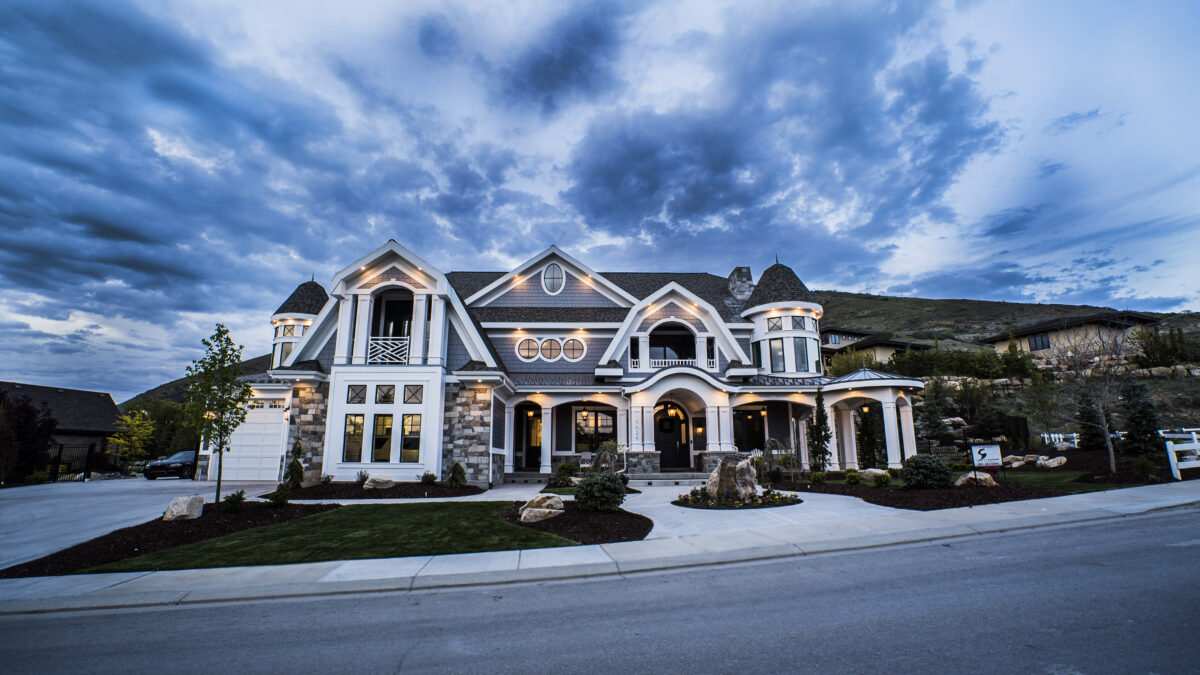
I strive to find that core emotion every single time I sit down with a client. It doesn’t matter if we are filming an interview for a local CEO, capturing luxury real estate videography to showcase a home’s lifestyle, or profiling a small business owner, if you don’t uncover the “why,” the visuals fall flat.

Businesses today don’t just need a person to hold a camera. They need to hire a videographer who can find those pain points. They need someone who isn’t afraid to go there, who is willing to ask the deep, sometimes awkward questions that get past the rehearsed corporate talking points.

Your business is your vision and your passion. If your video doesn’t make your audience feel that, you are leaving your most powerful asset on the table.

Are you ready to dig deep and tell the real story behind your business? Let’s capture your “why.” Visit webvideoimagery.com and let’s start the conversation.

Beyond the “Cinematic” Look: Why Your Utah Video Needs a Tailored Approach

If you’ve ever typed “videographer near me” into Google, you’ve probably been flooded with portfolios featuring slow-motion footage, moody lighting, and trendy music. It all looks incredibly “cinematic.” But here is the hard truth about video marketing: one-size-fits-all video production simply doesn’t exist.

If there is one thing I’ve learned over the years behind the camera, it’s that your visual style must be entirely dictated by the story being told—and the client you are shooting for.

Lessons from 20 Years in TV News

During my two decades in television news, I worked alongside hundreds of reporters and producers. They all had vastly different personalities and unique “flavors” for their stories. My job was to translate their vision into the lens.

When I was assigned to a political reporter, the approach was cut, dry, and simple. We needed clear framing, bright lighting, and absolute factual clarity.

But when I worked with a feature reporter? That required an entirely different mindset. I had to put serious thought into the look of the interview. We made deliberate choices about the style of lighting based on the emotional core of the story. I paid close attention to the lens length to create a sense of intimacy, hunted for interesting foreground elements to add depth, and captured natural sound pops and natural wipes to weave the narrative together.

Applying the News Mindset to Corporate Video in Utah

That exact same philosophy applies to the corporate video production Utah businesses rely on today.

A gritty, run-and-gun documentary project in the outdoors of Moab is going to look vastly different than an executive interview shot in a bright, modern office building in Lehi’s Silicon Slopes. That dark, heavily stylized “cinematic lighting” might look amazing on a filmmaker’s reel, but it absolutely will not work in every situation especially if your brand’s core values are transparency, approachability, and warmth.

A good cinematographer doesn’t just know how to turn on a camera and apply a trendy filter. They know how to read the room, change environments, and adapt their shooting style based on the specific situation.

Finding the Right Fit for Your Brand

Whether you are a startup in Utah County or a well-established manufacturing plant in Ogden, you need a visual partner who shoots for you.

If you’re searching for business video services Wasatch Front professionals trust, you need a team that takes the time to understand your unique corporate identity before they even touch a light stand. You don’t just need a camera operator; you need a strategic partner who knows that the visual tone of your video needs to match the message you are sending to your clients.

Elevate Your Utah Brand’s Story

At Web Video Imagery, we don’t force your brand into a pre-packaged box. We bring decades of high-level broadcast experience to the table, ensuring that the lighting, lensing, and pacing of your video are custom-tailored to your exact message.

If you are looking to partner with a top-tier promotional video company Salt Lake City businesses turn to for authentic storytelling, we are here to help.

Stop settling for cookie-cutter visuals. Work with a Utah video production company that actually knows who you are—and knows exactly how to shoot for you.

Ready to tell your story the right way? Visit us at webvideoimagery.com to start planning your next project today.

Beyond the Handoff: Why Small Businesses Need Collaboration, Not Just Referrals

Every small business owner knows the thrill of a good referral. You finish a project, the client asks if you know a good web developer or accountant, and you happily pass along a name. You get a little goodwill, your contact gets a warm lead, and everyone moves on.

It’s the standard way we do business. But what if we’re leaving our biggest growth opportunity on the table?

There is a massive difference between referring work and collaborating on work. If like-minded, complementary small businesses shifted their mindset from the former to the latter, we wouldn’t just be passing leads back and forth. We would be functioning as an interconnected “large company” punching far above our weight class and keeping our pipelines full.

Here is why it’s time to stop just referring names, and start building true collaborative partnerships.

The Limitations of the “Referral”

A referral is essentially a handoff. You are saying to your client, “I can’t help you with this, but here is someone who can.”

While helpful, referrals come with built-in limitations for small businesses:

  • The silo effect: You and your referral partner remain completely separate entities. You don’t share strategies, insights, or client data.
  • Loss of the client journey: Once you hand the client off, you lose visibility. If the partner drops the ball, it reflects poorly on you. If they knock it out of the park, you don’t get to share in that ongoing success.
  • Inconsistent revenue: Referrals are passive. You are waiting for the stars to align—for a client to ask a specific question at the exact right time.

The Power of True Collaboration

Collaboration means you stop acting like isolated vendors and start acting like different departments of the same powerhouse agency.

Instead of saying, “I’ll do the branding, and when I’m done, call my friend Sarah for the website,” a collaborative approach says, “We are going to handle your entire brand launch. I lead the visual identity, and my partner Sarah integrates it directly into a custom web platform for you.”

When companies collaborate, they build joint offerings. They get on the same kickoff calls. They share Slack channels. They align their timelines so the client experiences a single, frictionless journey.

The “Large Company” Advantage

When small, specialized companies weave their operations together, a kind of magic happens. You instantly gain the capabilities of a massive corporation, without the bloated overhead.

1. You Win Bigger Contracts

Corporate clients often avoid small freelancers because they don’t want to manage six different independent contractors. They want a one-stop shop. By collaborating, a copywriter, a designer, and a developer can bid on a massive corporate RFP as a single, unified team. You get to play in the big leagues.

2. You Feed Each Other Work Predictably

In a referral model, you cross your fingers and hope your partner remembers you. In a collaborative model, you are actively selling each other’s services as part of your own packages. Every time you sell a “Phase 1,” you are naturally teeing up your partner for “Phase 2.” The pipeline feeds itself.

3. A Premium Client Experience

Clients hate repeating themselves. When you collaborate, you share briefs, brand guidelines, and goals behind the scenes. The client feels like they are being taken care of by a highly organized, professional machine. That level of service commands premium pricing.

How to Make the Shift

Moving from referrals to collaboration doesn’t happen by accident. It requires intentional design:

  • Find Your Missing Pieces: Look for businesses that serve your exact target audience but offer the logical next (or previous) step in the client journey.
  • Build a Joint Product: Stop selling separate hours. Package your services together into a single, cohesive offering with a unified price tag.
  • Establish the “Back Office”: Decide how you will communicate. Set up a shared Google Drive, agree on a project management tool, and designate who will be the primary client point-of-contact for different phases.
  • Protect the Partnership: Draft a simple agreement detailing how revenue is split, how scope creep is handled, and what happens if a client is unhappy. Good fences make great collaborators.

We don’t have to scale up our payrolls to scale up our impact. By linking arms with the right partners, small businesses can build their own custom “large companies” delivering better work, landing bigger clients, and growing together.

Why Your Niche Brand Doesn’t Need an In-House Video Team (And What to Do Instead)

If you spend any time browsing job boards, you’ll see a familiar trend: growing e-commerce and niche product companies posting positions for full-time, in-house videographers. It sounds like the logical next step. You need more content, so you hire a content creator.

But for most companies. especially those selling a few specialized products in a niche market, an in-house video team is an unnecessary drain on resources. You don’t need someone on payroll 40 hours a week to point a camera at the same products. Here is what actually drives growth and saves you a ton of money in the process.

1. You Just Need a Solid Foundation of Website Videos

A common misconception is that you need a firehose of daily, highly produced video content to stay relevant. In reality, your brand needs a solid handful of foundational videos that do the heavy lifting.

You need a core Brand Story video for your homepage, a piece that communicates who you are, what you do, and most importantly, the emotional why behind your business. When you add a few high-quality product explainers or lifestyle videos, your website becomes a 24/7 sales engine. Once that premium foundation is built, you don’t need a full-time filmmaker sitting at a desk waiting for the next big project. You just need a social media manager to handle day-to-day community engagement.

2. A Strategic Ad Agency That Understands Intent vs. Awareness

Having great video is only half the battle; knowing how to deploy it is where the real ROI happens. Instead of paying an in-house videographer to guess what works on Meta or Google, companies should partner with a strong ad agency or strategist who truly understands the difference between intent and awareness.

  • Awareness: This is top-of-funnel content. Your audience doesn’t know you exist yet. The video needs to stop the scroll, introduce the brand’s core values, and spark curiosity.
  • Intent: This is bottom-of-funnel. The user is actively searching for a solution to their problem. The video content here needs to be direct, performance-driven, and focused entirely on conversion.

When a high-level video production team partners directly with a skilled ad strategist, you get campaigns that actually perform. You get A/B testing, script optimization, and real metrics, rather than just “pretty footage.”

3. The Hidden Power of B2B Relationship Building

Consumer advertising is vital, but many niche brands leave money on the table by ignoring B2B video strategies.

Doing your due diligence and building relationships with other businesses that could distribute or sell your product is often the key to scaling. Think about the broader ecosystem of your industry—manufacturers, sales networks, and complementary brands. A targeted video pitch designed specifically for a potential B2B partner or distributor can open doors that standard consumer ads simply cannot reach. This requires a level of storytelling and professional networking that goes far beyond typical social media content.

The Bottom Line: Save Your Budget

Hiring a mid-career in-house videographer can easily cost $60,000 to $80,000 a year, not including benefits, camera gear, lighting, and editing software.

By outsourcing your video production to a seasoned team, you gain access to decades of storytelling experience, high-end equipment, and strategic ad partnerships—all for a fraction of the cost of a full-time employee. You pay for the premium assets you actually need, and you keep your internal overhead low.

Don’t buy the in-house hype. Invest in a compelling brand story, partner with the right ad strategists, build strong B2B relationships, and watch your bottom line grow.

We Don’t Just Press Record: How Web Video Imagery Finds Your “Why”

In today’s digital age, anyone can buy a high-end camera, set it up on a tripod, and press record. But a camera doesn’t tell a story—the person behind it does.

At Web Video Imagery, we aren’t just a standard video production company. We don’t just show up to capture the “what,” “where,” and “how” of your business. Those questions are the easy part. The real magic happens when you dig deeper to find the emotional core of a brand. We are here to find your why.

The Art of the Interview 

For 20 years, I worked in the fast-paced world of television news. Sharing the field with some of the best reporters in the country, I learned that the most powerful tool in production isn’t the lens, it’s the conversation. I spent decades mastering “the art of the interview,” learning exactly how to navigate the space between a subject and a camera.

It’s an intimidating environment for most people. Having lights shining on you and a lens pointed in your direction can make anyone freeze up. But a great storyteller knows how to break down those walls. Making people feel comfortable enough to open up and share their authentic, emotional story is a specialized skill. It’s the difference between a robotic corporate script and a compelling, award-winning narrative that actually connects with your audience.

Moving Beyond the Push of a Button 

Many videographers are incredibly skilled technicians. They know how to operate the gear, frame a shot, and push a button. But when the red light goes on, they don’t know how to conduct the interview. They struggle to find the emotional heartbeat behind the business.

Every business owner has a reason they started doing what they do. There is always a story behind the late nights, the risks taken, and the passion that fuels the daily grind. Whether you are building custom luxury homes, guiding investments, or treating patients, your clients don’t just buy your services, they buy you. They buy your WHY.

We Tell That Story

 Our approach at Web Video Imagery is rooted in true broadcast journalism. We sit down with you, ask the right questions, and guide you through the process of articulating your purpose. We help you write your “why,” and then we translate that raw, authentic emotion into a visually stunning piece of content.

Your business is more than just a bulleted list of services. It’s a story waiting to be told. Let us help you tell it.

Darren Bailey Owner, Web Video Imagery

Every business video project has a different footprint.

For many local Wasatch Front shoots, operating as a nimble, solo professional is the most efficient way to capture a story without disrupting your daily operations. However, when a project demands a larger scale, we have the immediate capacity to manage and deploy a full crew including expert animators, licensed drone pilots, and dedicated audio operators. Regardless of the crew size, our commitment to your brand remains absolute. We ensure that every piece of content strictly adheres to your original design, taglines, and brand assets. Your legacy is safe with us.

Experience Matters

  • Anyone can buy a nice camera, but understanding how to capture an authentic story takes time.

With a professional background spanning 30 years in broadcast journalism and commercial video production including two decades in television news, I’ve learned how to find the heart of any story quickly and efficiently. As a 17-time Emmy award-winning storyteller and videographer, I bring a journalistic approach to corporate and commercial video. This means we don’t just capture pretty footage; we conduct natural interviews, anticipate the best moments, and craft narratives that actually resonate with your audience. When the final product represents your business, experience isn’t just a bonus… it’s essential.

How do you market yourself as a real estate agent?

  • The Wasatch Front real estate market moves fast, and buyers aren’t just looking for a house they are looking for a lifestyle and an agent they can trust. When potential buyers are scrolling through listings in Salt Lake City or Park City, static photos only tell half the story.

Cinematic home tours allow buyers to feel the flow of a property and understand its true scale before they ever step inside. Just as importantly, a professional agent bio video puts a face and a voice to your name, building immediate trust and credibility before the first handshake. It’s not just about showing the property; it’s about showing why you are the right person to guide them home.